
What is carbon footprint?
A carbon footprint, defined by the World Health Organization (WHO) as the amount of CO2 emissions produced in tons, is a measurement of the effect that human activities have on the volume of carbon dioxide (CO2) created through the combustion of fossil fuels. The ecological footprint is thought of as a subset of the carbon footprint. The ecological footprint compares the total resources people use with the amount of land and water required to replace those resources. The carbon footprint deals with resource usage but only considers the greenhouse gases released as a result of burning fossil fuels.

Carbon footprint causes
Fossil Fuels
Carbon emissions and other greenhouse gases are caused by the burning of fossil fuels in the environment. In fact, any activity to fulfil a human need requires energy that emits carbon dioxide. The electricity we use is mostly made from fossil fuels (such as coal, natural gas and oil). The more electricity we use, there is more fuel consumption for electricity production, leading to further increase in carbon dioxide.

Modern Lifestyle
If we make a car account for each person on this planet, then the result will be more than seven billion cars – enough to create a catastrophe for mankind. Emission of carbon dioxide from petrol and diesel is estimated to be about 2.4 kg per litre. Apart from the pollution caused by the vehicles we run, there are many other reasons for the increase of carbon dioxide in the atmosphere. Our home, equipped with latest power-driven equipment, is another major source of carbon dioxide, which adds up to our total carbon footprint.
Industrial Revolution
With the beginning of the industrial era, fuel began to be used on a large-scale, leading to production of carbon dioxide in large quantities. At the same time, forests, which used to absorb carbon, were harvested in a big way for farming to feed the growing population. We have destroyed forests and trees to get wood, minerals, land, and build buildings. Today the situation is such that there is no sufficient amount of trees to absorb the amount of carbon dioxide produced in the environment.

Food
The food we eat also contributes significantly to our carbon footprint. Especially when we eat processed foods, or we eat such foods that are not locally produced.
Air Travel
Travelling by air is becoming more affordable with no-frills service provided by many airlines. The use of this mode of travel has increased rapidly; tier-2 and tier-3 cities are experiencing a large number of airports. But the emission of carbon dioxide from the aircraft is about 90 kg CO2 per hour.
Carbon footprint consequences
Greenhouse Gases
Many human activities like electricity production and transportation results in the emission of green house gases like CO2 (Carbon di Oxide) resulting in the Greenhouse effect and an increase in Earth’s normal temperature. Many plastic production industries leave considerable amount of Carbon footprint, producing million of tons of Greenhouse gases into the Atmosphere.
Climate Change
An increase in Green house gases results in an increase in the Green House effect, raising Earth’s surface temperature. A rise in the average temperature of Earth melts glaciers raising the oceanic level and having a disastrous effect on the environment. The Greenhouse gas emission by Human activities have resulted in melting glaciers, rising sea levels and more intense sea waves and the situation will continue to worsen for decades.
Marine Life Depletion
Carbon footprint generated by human activities has resulted in a considerable decrease in the Marine Life including sea Turtles, Dolphins, Whales etc. Ships of various sizes, whether used for fishing or transport leave some kind of footprint behind them, when sailing through deep waters.
Depletion of Natural Resources
Carbon footprint left by Human activities play a vital role in decreasing our natural resources and harming the environment. Tons of Green House gases and other pollutants like CO2 (Carbon di-oxide) and CO (Carbon Mono oxide) as a result of human activities like transportation and production result in a decrease in the air Quality Index, indicating a decreased level of oxygen in the air.

Habitat Destruction
Various Human Activities such as mining, factories, building of Roads and Highways lead to the destruction of natural habitat of humans and animals. Acres of forests are cleared, cutting down thousand of trees, for making roads or for setting up new factories. Lush green forests are replaced by concrete jungle marked with human activities.
How can we reduce our carbon footprint?
- Consume local seasonal products
- Use high energy efficiency appliances
- Use water and electricity efficiently
- Use sustainable transportation whenever possible
- Switch to Renewable Energy

Small action – Big impacts. At position of a manufacturer, Kego Company Limited would like to try to reduce the Foot print with our own ways such as:
Using the materials with low carbon sequestration:
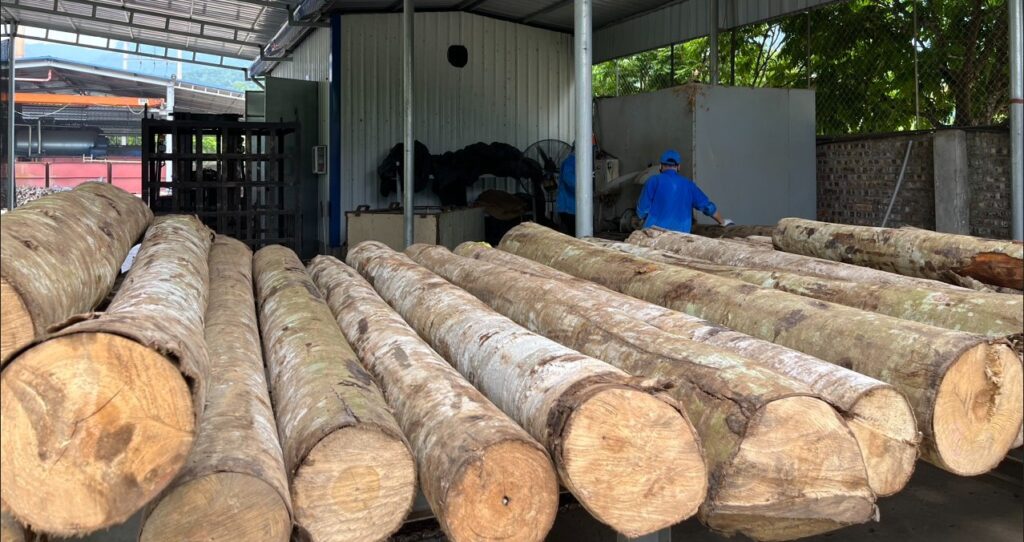
The carbon sequestration of magnolia conifera is low, just about 50-110 tons of Co2 per hectare (about three times lower compared to the carbon capture of Birch, at 180 tons of CO2 per hectare). Therefore, the amount of CO2 released while cultivating magnolia conifera is lower.

Limit the use of fossil fuels in production
During our production, we use the left parts from our materials such as Magnolia wood to be the burning fuel for the whole factory. By this way, we can limit the electricity created during our production and protect the environment. All the disposable wooden cutlery made by Kego Company Limited are our little help for our earth protection.
